Dental Care
How to Whiten Your Teeth Naturally: Effective Methods and Risks (2026 Guide)
Having white teeth is often associated with good hygiene and an attractive appearance. Over time, teeth can become yellow due to diet, coffee, tobacco, or simply natural aging.
Many people therefore look for natural solutions to whiten their teeth without going through expensive treatment at the dentist. But be careful: some methods found on the internet can be ineffective or even dangerous.
In this complete guide, discover the natural methods that really work, those to avoid, and professional advice for getting whiter teeth without damaging your enamel.
Why do teeth become yellow?
Before trying to whiten teeth, you need to understand why they turn yellow.
The main causes are:
1. Diet
Certain foods stain enamel:
coffee
tea
red wine
sodas
sauces
red berries
These foods contain pigments that stick to enamel.
2. Tobacco
Nicotine and tar cause very stubborn yellow or brown stains.
It is one of the most common causes.
3. Tartar
When dental plaque hardens, it forms yellowish tartar.
Only a professional cleaning can remove it completely.
4. Aging
With age:
enamel becomes thinner
dentin (more yellow) becomes visible
This is a natural phenomenon.
5. Poor hygiene
Insufficient brushing promotes stains.
Effective natural methods to whiten teeth
Here are the best-known natural solutions.
Important:
Some improve appearance but do not replace professional whitening.
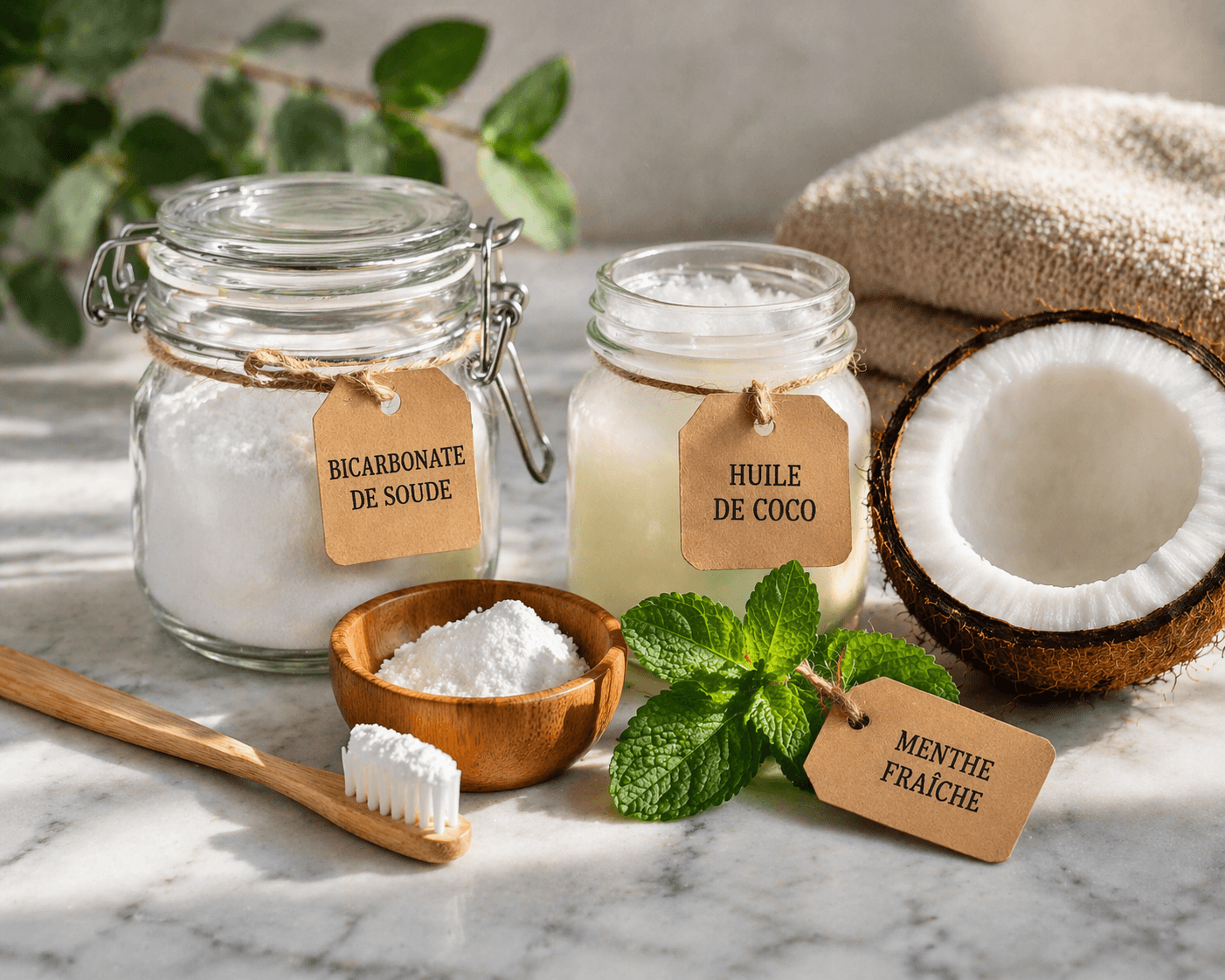
1. Baking soda
This is the best-known natural method.
Why it works:
Baking soda is slightly abrasive and helps remove surface stains.
How to use it:
mix a small amount with toothpaste
brush gently
once a week maximum
Warning:
Excessive use can wear down enamel.
2. Activated charcoal
Very popular on social media.
Effect:
It absorbs certain impurities and may reduce surface stains.
Use:
activated charcoal powder
brush gently
rinse thoroughly
Warning:
Do not use too often.
Maximum:
once a week.
3. Coconut oil (oil pulling)
A technique used for a long time.
Principle:
Oil helps reduce bacteria.
Method:
1 spoonful of coconut oil
keep in the mouth for 5 to 10 minutes
spit out
rinse
May improve overall hygiene but only slight whitening.
4. Strawberries (limited effect)
Strawberries contain malic acid.
This can:
clean slightly
give a temporary effect
But:
scientifically weak effect.
5. Good brushing (the truly effective method)
The most underestimated solution:
electric toothbrush
fluoride toothpaste
2 minutes minimum
Good brushing already improves color a lot.
Dangerous natural methods to avoid
Some internet tips can damage teeth.
Absolutely avoid:
❌ Pure lemon
Very acidic.
Risk:
enamel destruction
tooth sensitivity
❌ Vinegar
Same problem:
it attacks enamel.
❌ Undiluted hydrogen peroxide
Can burn the gums.
❌ Aggressive brushing
Scrubbing too hard does not whiten.
It wears down enamel.
What dentists really recommend
Professionals recommend:
Priority:
good hygiene
regular scaling
suitable toothpaste
avoid tobacco
And if necessary:
professional whitening.
How long does it take to see results?
With natural methods:
1 to 4 weeks for slight improvement
With improved hygiene:
quick visible improvement
With dentist whitening:
immediate results.
Simple tips to keep teeth white
Here are the most effective habits:
After coffee or tea:
Drink water.
Use a straw:
Reduces contact with teeth.
Brush your tongue:
Removes bacteria.
Dental floss:
Reduces plaque.
Scaling:
Every 6 to 12 months.
Common mistakes
Many people make these mistakes:
wanting teeth that are too white
using too many abrasive products
believing TikTok tips
neglecting gums
whitening unhealthy teeth
Important:
A healthy tooth first and foremost.
Natural methods vs dentist whitening
Comparison:
Natural methods:
inexpensive
mild effect
gradual
Professional whitening:
fast
effective
more expensive
When should whitening be avoided?
Do not whiten if:
cavities
infection
inflamed gums
pregnancy (medical advice)
very sensitive teeth
Always check first.
FAQ – Frequently asked questions
Can you really whiten your teeth naturally?
You can:
improve the color.
But:
changing natural color is difficult without professional treatment.
Does baking soda damage teeth?
Yes, if used too often.
Correct:
once a week maximum.
What is the safest method?
The best foundation:
effective brushing
scaling
daily hygiene
Why do my teeth stay yellow despite brushing?
Possible causes:
tartar
visible dentin
genetics
diet
A dentist can check.
What is the best simple tip?
The one that changes everything:
👉 brush properly twice a day.
Conclusion
Whitening your teeth naturally is possible to slightly improve their appearance, but you must be cautious with certain aggressive methods found on the internet.
The best solutions remain the simplest: good hygiene, an appropriate diet, and regular checkups.
Natural methods can help, but they must be used in moderation to avoid damaging enamel.
Healthy teeth are always more important than teeth that are simply whiter.
Article updated 2026



A smile for always —